-
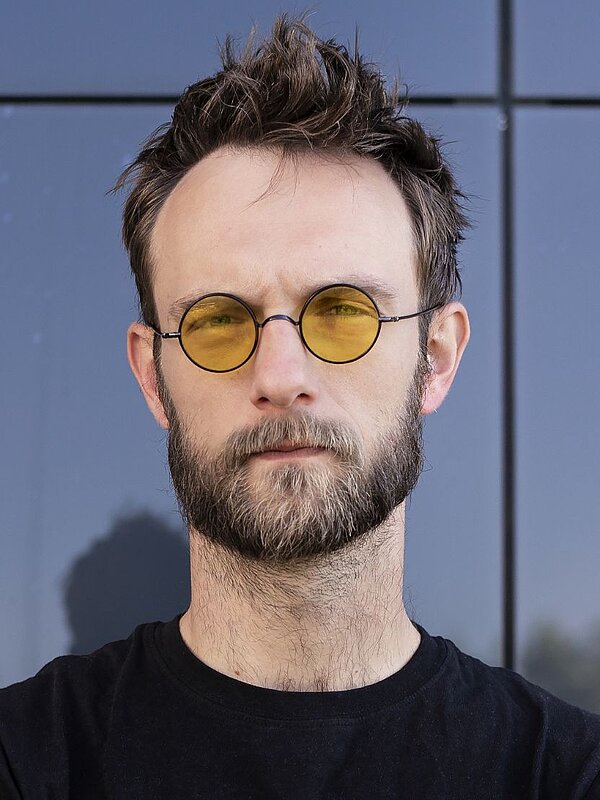
Mgr. Petr Adámek, Ph.D.
Research group leader
The PeThrS Lab (Perceptual Theory of Schizophrenia) is a junior research group focused on validating the Perceptual Theory of Schizophrenia (PerTh-Sch), which we formulated as part of our research agenda. This theory proposes that retinal dopamine instability may be one of the primary mechanisms contributing to the onset and progression of schizophrenia. According to this framework, dysfunction of dopaminergic amacrine cells in the retina generates aberrant visual signals that propagate along the visual pathway and may affect cortical development, salience attribution, and synaptic reorganization, processes central to the emergence of psychotic symptoms.
Research group website: https://pethrslab.nudz.cz
We pursue four complementary experimental approaches to test this theory:
Human studies – We are developing a non-invasive tool for measuring retinal dopamine dynamics using electroretinographic (ERG) paradigms, with data from approximately 80 vitrectomy patients. In parallel, we focus on early detection of at-risk populations using eye-tracking methods.
Animal models – Using a rat model, we investigate the effects of chemogenetic modulation of retinal dopamine on cortical network development. We test the hypothesis that altered retinal input during development leads to non-physiological maturation of cortical networks and excessive synaptic pruning.
In silico modeling – We employ spiking neural network models of the retina, LGN, and visual cortex to simulate the effects of dopaminergic and serotonergic modulation on signal characteristics throughout the visual pathway. We are also investigating whether manipulation of serotonergic and dopaminergic model parameters can give rise to spontaneous hallucinations.
In vitro studies – We are establishing protocols for working with retinal organoids derived from patient iPSCs. The goal is to compare the electrophysiological properties of organoids from healthy controls and schizophrenia patients using multi-electrode arrays (MEA).
The research activities are carried out through international collaborations, notably with the Karmacharya Lab (Center for Genomic Medicine, Massachusetts General Hospital / Harvard Medical School), the laboratory of Prof. Majlinda Lako (Newcastle University, Biosciences Institute), the laboratory of Prof. Thomas Euler (Universität Tübingen), and with Prof. Steven Silverstein and Dr. Paolo Lizano (University of Rochester). The group is part of the Center for Advanced Brain and Consciousness Studies at the National Institute of Mental Health, Czech Republic.
The group leader is currently completing a postdoctoral fellowship at Harvard Medical School (Fulbright-Masaryk Scholarship), where he is developing differentiation protocols for horizontal and amacrine cells from human iPSCs.